
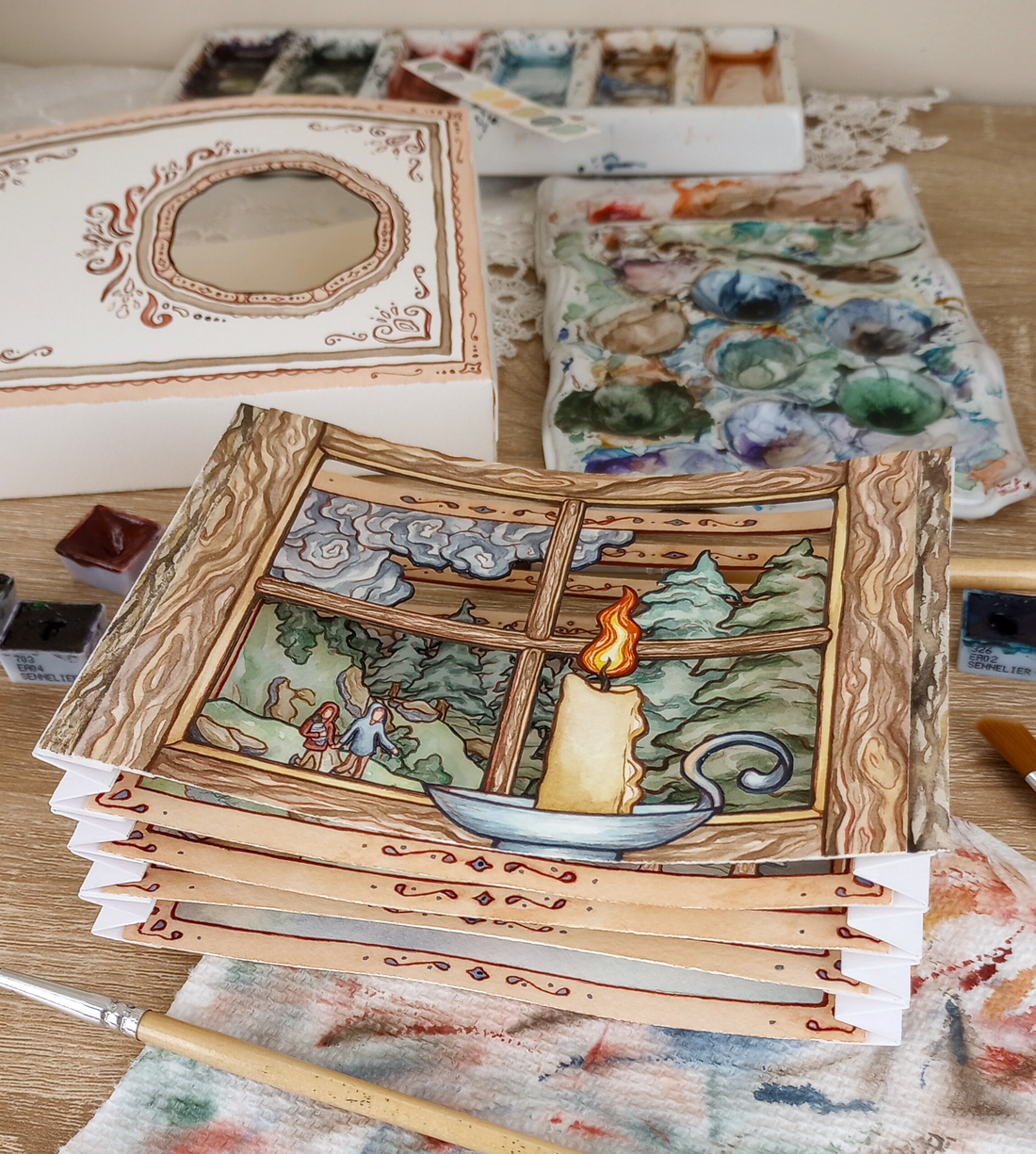
Keep A Light On
Earlier this week the world observed International Holocaust Remembrance Day, and all my studio time for the past three or four days has been accompanied by audiobooks on the subject. Of the four I've listened to, the one I've found most impactful has been Timothy Snyder's "Black Earth: The Holocaust as History and Warning." Snyder is a historian and professor at Yale, specializing in the history of Central and Eastern Europe, the Soviet Union, and the Holocaust. In this 2015 book, he devotes a good deal of attention to the often poorly-understood Holocaust history of the Eastern Front, and to the question that always frightens us but begs to be asked: how?
Synder's examination provided me with many new ideas and some valuable clarity on certain points I've always found perplexing, but one of the concepts I came away pondering was by no means a new one and it's this: that boundless horrors wait in the wings of any decision to dehumanize others or shut our senses to their suffering; that wherever we experience pressure to scapegoat categories of humans or to reject an urge to compassion, we should never go unthinking into that dark night.
Across all the books I listened to this week, one of the saddest recurring themes discussed by Holocaust memoirists was the frantic (and usually hopeless) struggle to find any nation on the planet that would give them asylum as the threat of annihilation closed around them and their families. I find something almost unbearable about the knowledge that untold hundreds of thousands (and probably fully millions) of Jews and other internally displaced Eastern European refugees could certainly have escaped the atrocities of the second world war had they been granted refuge in the more stable and prosperous nations where they applied for admittance but were turned away.
As I've been reflecting on this historic tragedy, I've also been feeling heavy-hearted about the current crisis faced by over 10,000 global refugees who have been cleared to travel to the US but had their flights abruptly cancelled a week ago when refugee arrivals to the United States were suspended "until further notice." I know this development is anxiety-inducing and may even be catastrophic for many families living in grave danger, and I find that my thoughts keep turning to those devastated people.
It was with all these thoughts, concerns, and histories swirling in my head that I undertook to create something new this week: an intricate little hand-cut paper theatre. Art has a very long history of holding our longings, griefs, and ideals, and I think it is no surprise I felt pulled to create a scene that would speak to our present moment, to these hard times in which a deliberate hardening of the heart towards the pain of others is becoming a point of boasting among leaders from elected officials to clergy.
 I'm calling this piece "Keep A Light On," and am dedicating it to my persistent belief in principles of empathy, hospitality, and humane treatment of the "other" at a time when a very different kind of language has permeated the public discourse. I can recall a time when these principles felt so elementary as to be almost an embarrassing thing to champion. But I have lived to see a time when widely-respected leaders are openly encouraging their followers to resist practicing empathy.
If we are able to learn only one thing from the troubled history of the 20th century—an era riddled with widespread atrocities by no means limited to the Holocaust—I think that one thing ought to be that a world without empathy is a nightmare world, a wasteland of corpses without purpose or meaning. May we learn that while we still can. While we can. Note: This paper theatre creation is a construction also known as a "tunnel book" and needs to be expanded and viewed from multiple angles in order to be properly seen. If you'd like to see what it looks like in action, check out this video over on the Mandalina Tree Instagram page.
All the best,
Bryana